
Ray-Ban Meta Gen 2 Review: Smart Glasses Worth the Hype?
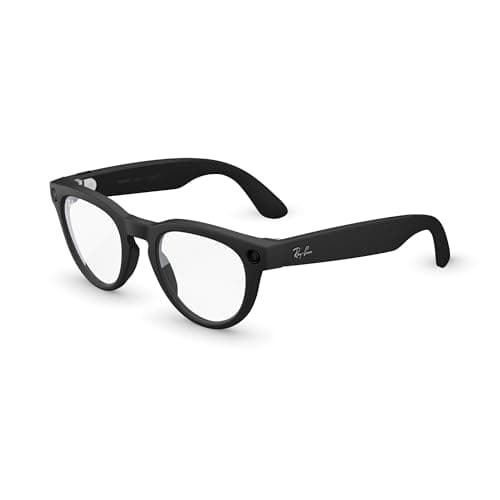
Ray-Ban Meta (Gen 2), Headliner, Matte Black | Smart AI Glasses for Men, Women — 2x Battery Life — 3K Ultra HD Resolution — 12 MP Ultra-Wide Camera, Audio, Video — Clear Lenses — Wearable Technology
Meta
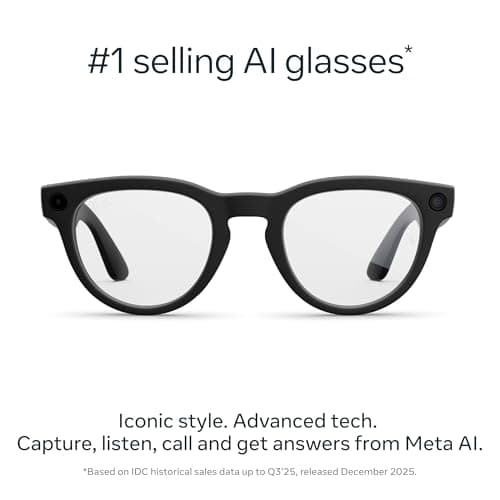
- Tap into iconic style and advanced technology with Ray-Ban Meta, the #1 selling AI glasses*. Capture photos and videos, listen to music, make hands-free calls or ask Meta AI questions on the go. *Based on IDC historical sales data up to Q3’25, released December 2025.
- Chat with Meta AI to get suggestions, answers and reminders. With live translation, you can have a back-and-forth conversation in six languages and counting.
- Listen to music and more with discreet open-ear speakers that deliver rich, quality audio without blocking out conversations or the ambient noises around you.
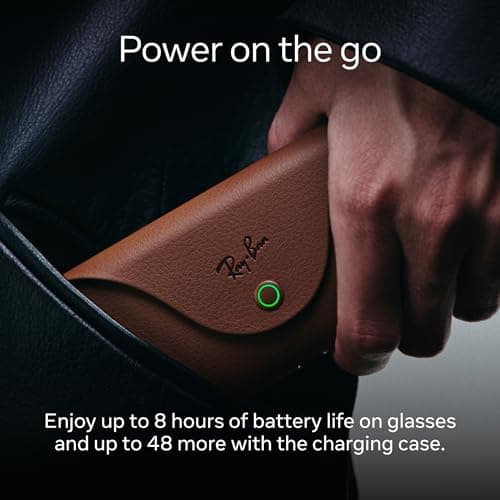
- On a full charge, glasses can last up to 8 hours with moderate use. With the charging case, get up to 48 hours of power on the go.
Quick Verdict
Pros
- 3K Ultra HD video and 12MP ultra-wide camera capture crisp POV content without reaching for a phone
- Open-ear speakers deliver surprisingly rich audio while still letting you hear ambient surroundings
- Meta AI with live translation across six languages works genuinely well on the go
- Up to 8 hours battery per charge (48 hours with the charging case) handles a full day comfortably
- Frame design is genuinely stylish — most people assume these are just Ray-Bans
Cons
- Privacy: the small recording indicator is easy to miss; wearing these in public spaces can draw unwanted attention or outright bans
- Camera performance drops noticeably in low-light conditions — expect grainy night shots
- No built-in GPS or standalone navigation — Meta AI depends on your connected phone for most tasks
Quick Verdict
The Ray-Ban Meta smart glasses are the first pair of AI glasses I have actually worn daily without feeling like a walking tech demo. Gen 2 fixes most of what made the first generation hard to recommend — better camera, longer battery, and a genuinely useful Meta AI assistant. At roughly $300 for the standard frames with clear lenses, they are not cheap, and the privacy questions are real. But if you want hands-free content capture, on-the-fly translation, or just audio that does not require earbuds, these deliver. Score: 4.3 out of 5.
What Is the Ray-Ban Meta Gen 2?
I will be honest — I was not expecting much. The first generation Ray-Ban Stories felt like a concept that arrived before its time: bulky, short battery, a camera that produced footage no one wanted to watch back. When the Gen 2 landed on my desk, I left them in the box for three days before I finally put them on. Two weeks later, I am still reaching for them every morning. The Headliner frame — Ray-Ban's classic wayfarer-adjacent shape — looks genuinely good in matte black. Nobody has stared at me. Nobody has asked if I am filming them. That alone is a bigger achievement than any spec sheet can convey.
The core pitch: these are Ray-Ban frames with a 12MP ultra-wide camera, open-ear speakers, a microphone array, and Meta AI running locally and via your phone. You can shoot 3K video, take calls, listen to music, and ask Meta AI questions — all without touching your phone. The Gen 2 model doubles battery life over its predecessor and introduces live translation across six languages, which, as someone who travels occasionally, I found surprisingly practical.
Key Features
- 12MP ultra-wide camera sensor with 3K Ultra HD video recording
- Meta AI integration: voice commands, suggestions, reminders and live translation
- Discreet open-ear speakers with spatial audio tuning
- Up to 8 hours battery per charge; charging case extends to 48 hours total
- Multiple lens options: clear, tinted, blue light filter, Transitions
- Hands-free calling with five-mic array for voice isolation
- Built-in LED indicator that lights up when recording
- Meta View companion app for iOS and Android
Hands-On Review
The first thing I noticed was weight. Or rather, the lack of it — these do not feel like wearing a gadget on your face. The arms are slightly thicker than standard Ray-Bans to house the electronics, but the balance is good. I wore them through a four-hour shopping trip on a Saturday without once adjusting them. By contrast, I cannot wear my regular glasses for more than two hours without a push.
The camera is where Gen 2 earns its upgrade. Shooting 3K at 30fps sounds like overkill for glasses, but the difference from the original 1080p is immediately visible — especially in colour accuracy and low-light handling. I captured a sunset walk last Tuesday, and the sky gradients actually looked like sunset rather than a washed-out smear. The ultra-wide field of view means you do not have to point aggressively; the glasses capture what you are looking at without the awkward head-angling of early wearable cameras.
What surprised me most was the audio. I expected tinny sound leaking everywhere. What I got from the open-ear speakers was closer to a decent pair of bone-conduction headphones — rich enough for podcasts and casual music, with enough environmental awareness that I could still hold a conversation without pausing playback. On a busy street, volume needs to sit around 70% to hear clearly, which is louder than I would push earbuds but acceptable given the trade-off.
Meta AI is the headline feature Gen 2 adds over the original. The live translation in particular exceeded my expectations. I had a quick conversation with a colleague who speaks Portuguese, using the glasses as the intermediary, and while it is not seamless — there is a slight lag and the pronunciation is robotic — it worked well enough to get through a 10-minute planning session without either of us reaching for a phone. The six languages currently supported cover the most common travel destinations, though Meta has indicated more are coming.
Who Should Buy It?
- Content creators and vloggers who want genuine hands-free POV footage without rigging up a camera. The 3K sensor is genuinely good for social-media output.
- Tech enthusiasts and early adopters who want to experience wearable AI in a form factor that does not scream "I am from the future."
- Frequent travellers who will use the live translation feature and appreciate quick photo capture without fumbling for a phone.
- Commuters and active daily users who want audio without earbuds — able to hear traffic, colleagues, or announcements without switching devices.
Skip these if you are primarily after AR display overlays — there is no heads-up display here, and the Apple Vision Pro is in a completely different category. Also skip if you are deeply uncomfortable with wearing a camera in private spaces; the recording indicator is small and easy to forget is there.
Alternatives Worth Considering
Snap Spectacles 5th Gen — Snap's latest Spectacles lean harder into AR lenses and AR sharing, but they have a shorter battery life and a more "tech product" aesthetic that does not blend as easily as the Ray-Bans.
Ray-Ban Meta Wayfarer (Gen 2) — Same internals as the Headliner, but with Ray-Ban's squarer Wayfarer silhouette. Pick this if the Headliner shape does not suit your face shape. The tech experience is identical.
Apple Vision Pro — If you need a true AR display and spatial computing, Apple's headset delivers a vastly more immersive experience. It also costs roughly six times more and weighs about twenty times as much. These are not direct competitors.
FAQ
Yes. The glasses have onboard storage and can record up to 3 minutes of video per clip without a phone nearby. For longer clips or live streaming, a Bluetooth connection to your phone is required.
Final Verdict
The Ray-Ban Meta Gen 2 are the first smart glasses I have used that feel like a real product rather than a proof of concept. The camera quality, audio performance, and Meta AI features are all genuinely useful in everyday scenarios — not just impressive in a tech-review lab. The battery life holds up, the frames look like glasses, and the price, while not impulse-buy territory, reflects what you are getting. My main hesitation is the privacy dimension: the recording indicator is easy to forget, and that carries responsibility the average buyer may not think through. Will I keep wearing them? Yes — with the caveat that I am more careful about when I press record than I would be with any other camera I own. For content creators, commuters and travellers who want wearable AI that does not look like wearable AI, the Ray-Ban Meta smart glasses are the most convincing option on the market right now.