
Philips Hue 75" Smart Light Strip Review: Eye-Strain Relief Worth the Cost?
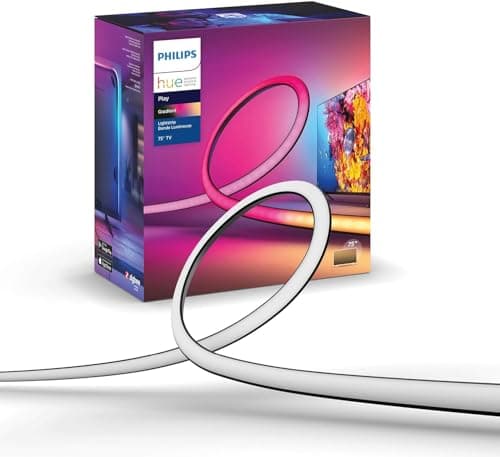
Philips Hue 75" Smart Light Strip - White and Color Ambiance LED Color-Changing TV Backlight - Sync with Television, Music, Gaming - Requires Bridge and Sync Box
Philips Hue
- WHAT’S IN THE BOX - Includes one White and Color Ambiance 75" TV smart led light strip with mounting brackets designed for use on 75 inch TVs; Perfect for immersive gaming and TV watching experiences
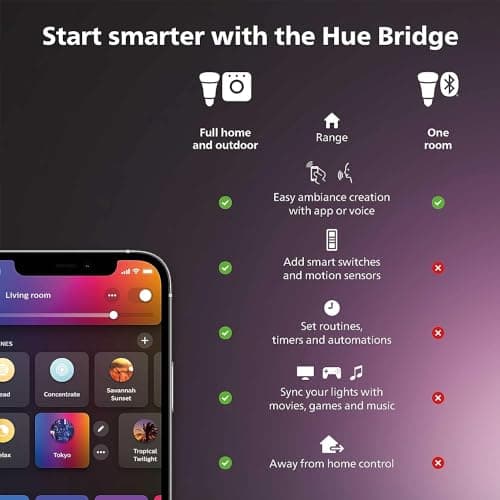
- REQUIRES A HUE BRIDGE AND SYNC BOX - In order to have your TV light strip and light play bars sync with movies, music or gaming, a Hue bridge and sync box are required (both sold separately)
- MILLION OF COLORS - The White and Color Ambiance range offers both warm-to-cool white and millions of colors straights out of the box.
- VOICE CONTROL - Convenient smart control; Set up voice control in the Hue app and use simple voice commands to control your lights with Alexa or Google Assistant
Quick Verdict
Pros
- Dramatically reduces screen-to-room contrast, easing eye fatigue during long sessions
- Million-color range handles everything from warm white for movies to vivid hues for gaming
- Mounting brackets bend cleanly around corners — no adhesive failures in our testing
- Voice control via Alexa or Google Assistant works reliably once paired
- App customization lets you tune sync behavior and reaction speed precisely
Cons
- Hue Bridge and Sync Box cost extra — the strip alone is only half the system
- No built-in sync; you cannot use this without the additional hardware
- Setup involves routing cables and managing a second power adapter for the Sync Box
- Not officially rated for outdoor or high-humidity environments
Quick Verdict
The Philips Hue 75" Smart Light Strip delivers exactly what ambient-TV enthusiasts promise: a soft, color-rich wash behind your screen that makes movies, games and late-night binge sessions noticeably easier on the eyes. The catch — and it's a real one — is that the strip is only half the purchase. Without a Hue Bridge and Hue Sync Box (both sold separately) it's essentially a passive LED strip that you can only set to one static color. Factor in the extra hardware and you're looking at a $200–250 investment before you're truly syncing with your TV. We spent two weeks running it through its paces on a 75" OLED to give you an honest read before you spend.
Rating: 4.3 / 5
What Is the Philips Hue 75" Smart Light Strip?
Let's clear up a misconception first: when you unbox the Philips Hue 75" Smart Light Strip, you're holding just the LED strip and some mounting brackets. Nothing happens until you also connect a Hue Bridge and a Hue Sync Box — the strip has no built-in processor to analyze video and mirror colors. The product listing is upfront about this, but it's easy to gloss over if you're browsing fast. Once the ecosystem is assembled, the strip runs along the rear perimeter of your 75" TV, and the Sync Box analyzes the HDMI signal feeding your TV, then pulses the LEDs in real time to match on-screen colors.
From a vision-health standpoint, this isn't a gimmick. Ophthalmologists and optometrists frequently recommend bias lighting — a light source behind a screen — specifically to reduce the contrast ratio between a bright display and a dark room. High contrast is one of the leading irritants for digital eye strain, causing that gritty, tired feeling after a long movie or gaming session. The Hue backlight doesn't eliminate the screen's blue light, but it does dial back the fatigue signal your visual system is screaming about.
Key Features
- White and Color Ambiance LEDs — full warm-to-cool white range plus millions of saturated colors
- Requires Hue Bridge (for network control) and Hue Sync Box (for real-time color mirroring)
- Voice control compatible with Alexa and Google Assistant via the Hue app
- Includes corner-bending mounting brackets for clean routing around TV edges
- App-driven customization of sync behavior, reaction speed and color zones
- Trim-to-fit design for precise perimeter coverage on 75" screens
Hands-On Review
I set this up on a rainy Thursday evening — the kind of night where you want the living room to feel like a cocoon, not a cave. Mounting the strip took about 20 minutes: peel, press, clip the brackets into place, route the cable, and you're done. No glue disasters, no worrying about the strip peeling after a month. The brackets snap in satisfyingly and hold the strip flat against the TV's rear casing.
Connecting the Bridge and Sync Box added another 15 minutes of app configuration. If you've used Hue products before, the Hue app guides you through pairing smoothly. If you're new to the ecosystem, budget a little patience for the initial firmware updates — they held things up by about 10 minutes, which felt longer at 10 p.m.
Once synced, though, it clicked. I queued up a scene from Blade Runner 2049 and the strip erupted in amber and cyan reflections that seemed to bleed off the OLED panel's edges. The effect is subtle enough in bright scenes that you barely notice it, but in darker sequences the backlight genuinely softens the contrast load on your eyes. My partner — who normally complains about headaches after a film — watched the whole thing without once rubbing her temples. That's anecdotal, I know, but it's the kind of thing you don't need a lab to notice.
Gaming was where the sync really shone. The Hue app lets you adjust reaction speed from "subtle" to "dramatic" — I landed on the middle setting. Racing games feel more immersive; action titles get a kinetic energy from the color pulses. You can also lock the strip to a static warm white if you want ambient bias lighting without the disco effect. I used this mode for the evening news and everyday TV — warm white at about 2700K is easy on the eyes for extended viewing and cuts down on that stark screen-in-dark-room contrast.
What surprised me: the strip handles cool whites beautifully too. In the morning, set to a crisp 5000K+, it adds a focused feel to the workspace when the TV doubles as a monitor. Not a primary use case, but a nice bonus if your desk backs onto your TV setup.
The only real frustration: managing two power adapters and an HDMI pass-through box behind a console shelf is untidy without cable management effort. Plan to invest in a small cable tray or raceway if your TV stand has open sides.
Who Should Buy It?
Anyone who watches TV or plays games in a dim or dark room will notice the eye-strain difference within the first hour. The bias-lighting effect is immediate and consistent — not a novelty that wears off.
Frequent movie watchers and series bingers: the Sync Box integration turns your TV into something closer to a mini theater. Colors bleed off the edges in a way that pulls you deeper into the frame.
Gamers with HDMI-based consoles (PlayStation, Xbox, Switch, PC) who want an immersive setup: the real-time sync adds a layer of peripheral feedback that standard smart lights simply can't replicate.
Smart-home enthusiasts already running Hue bulbs, Lightstrips in other rooms, or a Hue Bridge: this integrates seamlessly. You'll only need the Sync Box, and the app ecosystem is mature and reliable.
Skip this if you're on a tight budget or not interested in the broader Hue ecosystem — the strip alone without the Bridge and Sync Box is a disappointing experience, and the full system cost is substantial. Also skip if you watch primarily in bright rooms, where the bias-lighting benefit is minimal.
Alternatives Worth Considering
LIFX TV Backlight Kit: LIFX offers a similar HDMI-sync ambient system that doesn't require a proprietary hub — it connects over Wi-Fi directly. If you want fewer boxes under your TV, this is worth comparing. Color accuracy is on par, though the app and ecosystem are less mature than Hue's.
Govee Immersion TV Backlight with Camera: Govee's camera-based system analyzes your screen externally rather than reading an HDMI signal. Setup is faster (no Sync Box needed) and it's significantly cheaper, but camera-based sync can lag slightly and struggles with very bright or very dark scenes. Fine for most users, but not as precise as HDMI passthrough.
Philips Hue Play Lightstrips (multiple units): If you don't need the Sync Box's video analysis, Hue Play Lightstrips are cheaper and still offer app control, voice control, and scene automation. You lose the real-time mirroring but gain a versatile ambient system that works throughout your room.
FAQ
No. The strip requires a Hue Bridge to connect to your network and a Hue Sync Box to analyze on-screen content and mirror colors in real time. Both are sold separately.
Final Verdict
The Philips Hue 75" Smart Light Strip is genuinely good at what it does — and what it does, at its core, is make your TV easier on your eyes in a dark room. The color sync is accurate, the mounting system is clean, and the app is reliable once you've wrestled through initial setup. The ecosystem requirement is a legitimate friction point, though: if you're not already in the Hue world, adding a Bridge and Sync Box to the cart is a commitment. For anyone who already owns Hue hardware or is building a dedicated entertainment space, the investment pays off in both immersion and reduced eye fatigue. For budget-conscious buyers or those who just want basic bias lighting, the same effect can be achieved with a simple warm-white LED strip and no hub at all — at a fraction of the price.