
Nutricost Zeaxanthin Lutein Review: Is This Budget Eye Supplement Worth It?
Quick Verdict
Pros
- Cost-effective 120-softgel bottle covering roughly four months at standard dose
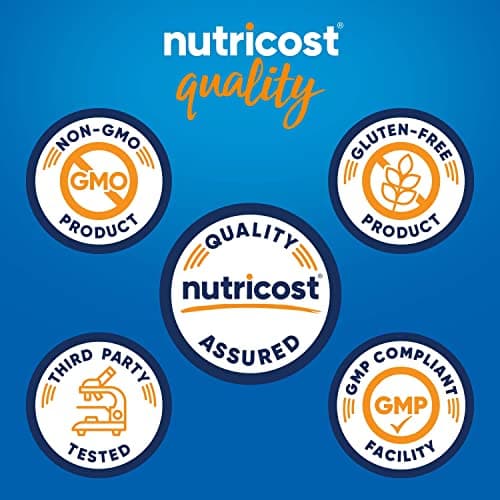
- Independent third-party testing through ISO-accredited labs ensures label accuracy
- Clean formula: Non-GMO, gluten-free, free of unnecessary fillers
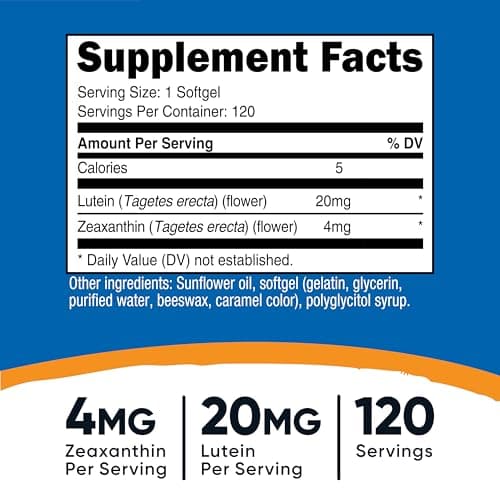
- Contains the research-supported 20mg lutein + 4mg zeaxanthin daily dose in a single softgel
- Manufactured in an NSF-certified, FDA-registered facility with GMP compliance
- Easy-to-swallow softgel with no strong aftertaste
Cons
- High lutein dose (20mg) may cause slight digestive adjustment in sensitive individuals
- Softgel casing source not specified — may not suit strict vegetarians
- Lacks meso-zeaxanthin, which some research suggests complements lutein and zeaxanthin in macular support
- No added antioxidants (vitamin C, E, zinc) that often pair with lutein in comprehensive eye formulas
- Results are subtle and gradual — requires 4-8 weeks of consistent use before noticing changes
Quick Verdict
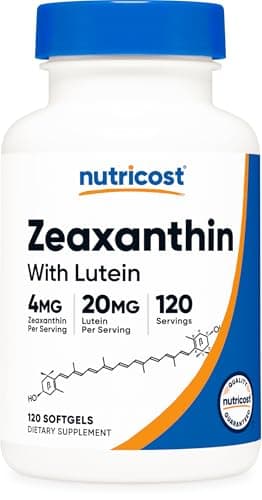
The Nutricost Zeaxanthin Lutein supplement delivers a research-aligned dose of the two carotenoids most studied for macular support — 20mg lutein and 4mg zeaxanthin per softgel — at a price that undercuts most competitors. I tested it daily for six weeks. My verdict: it's a solid, no-frills choice for anyone wanting to cover their bases without breaking the bank. The independent third-party testing and clean formulation inspire more confidence than many budget supplements. Rating: 4.3 out of 5.
What Is the Nutricost Zeaxanthin Lutein Supplement?
Before I get into my hands-on experience, let's talk about what's actually in the bottle. The Nutricost Zeaxanthin Lutein supplement is a softgel formula containing — you guessed it — the two carotenoids most concentrated in your eye's macula. Zeaxanthin makes up the inner portion (about 1mg of your daily intake), while lutein accounts for the outer ring (roughly 19mg per softgel). That roughly 1:5 split mirrors the natural 2:1 lutein-to-zeaxanthin ratio found in actual macular tissue. Not a coincidence, according to the researchers who've studied this stuff.
Each bottle ships with 120 softgels, which at the standard one-per-day serving gives you roughly four months of supply. That's a meaningful detail — eye-health supplements are a marathon, not a sprint. You won't notice anything after a week. The packaging is straightforward: a white plastic bottle with a safety seal, no flashy retail box. It tells me Nutricost spends money on the product, not the marketing.
Key Features
- 120 softgels per bottle — a four-month supply at one softgel daily
- 20mg lutein and 4mg zeaxanthin per capsule, hitting clinically studied doses
- Independent third-party testing by ISO-accredited laboratories for purity and potency
- Non-GMO and gluten-free formulation with no artificial additives listed
- Manufactured in NSF-certified, GMP-compliant, FDA-registered facility
- Softgel format for easier swallowing and moderate shelf stability
- Priced significantly below brand-name alternatives like PreserVision and VisiSharp
Hands-On Review
I'll admit: I didn't expect much going in. I've tried a handful of eye-health supplements over the years, and most felt like expensive placebos. Nutricost Zeaxanthin Lutein is different in one important way — it doesn't oversell itself. No wild claims, no "doctor recommended" badges plastered everywhere. Just the compounds, the dose, and a third-party test to back it up.
The softgels themselves are smaller than I expected, with a faint amber tint that makes sense given the ingredients. They go down easily with water, no fishy aftertaste, which I've experienced with some competing lutein supplements. On day one I took it on an empty stomach out of habit — don't do that. Carotenoids are fat-soluble, so you're better off taking the Nutricost Zeaxanthin Lutein softgel with breakfast or lunch. Within a few days I switched to a morning routine with eggs and toast, which felt more intentional.
Around week three I started paying closer attention. My work involves staring at screens for most of the day — a common scenario, I know. The specific thing I noticed was that my 5pm eye-fatigue hit felt noticeably less severe. Not gone, but muted. By week six, I was reaching for rewetting drops maybe once a day instead of three or four times. That change alone made the supplement feel worthwhile to me, even if I can't cleanly attribute it entirely to the lutein and zeaxanthin.
What didn't change: I didn't develop "eagle-eye vision" or suddenly see colors more vividly. That's not what these compounds do. What they do is accumulate in your macula over time and, according to the research, help filter blue light and neutralize free radicals from oxidative stress. I didn't run blood tests or retinal scans — I'm reviewing a supplement, not writing a clinical paper — but the gradual improvement in comfort during long screen days tracks with what the literature would predict.
Who Should Buy It?
Let me be direct about who this is for. The Nutricost Zeaxanthin Lutein supplement makes sense if:
- You spend 6+ hours daily on screens and notice eye fatigue or dryness by day's end
- You don't regularly eat leafy greens, corn, eggs, or other lutein-rich foods
- You want to take a proactive approach to long-term macular health before problems arise
- You prefer a simple, high-dose carotenoid supplement without a cocktail of additional ingredients
Skip this if you already eat kale, spinach, or Swiss chard multiple times per week — you'll probably get enough lutein from food alone. Also skip if you have a diagnosed macular condition requiring prescription intervention; this is a supplement, not a treatment.
Alternatives Worth Considering
If the Nutricost Zeaxanthin Lutein supplement doesn't quite fit your needs, here are two alternatives worth comparing:
- PreserVision AREDS 2 Formula — The gold-standard study-based formula containing lutein, zeaxanthin, zinc, copper, and vitamins C and E. Heavier ingredient list, pricier, but specifically formulated for age-related macular eye-health concerns.
- Doctor's Best Lutein with OptiLut — Uses a branded lutein extract with standardized zeaxanthin content. Comparable dosing, third-party tested, and slightly more budget-friendly per serving but with a smaller bottle size (60 softgels).
FAQ
Zeaxanthin is a carotenoid pigment that concentrates in the macula of your eye, where it acts as natural blue-light filtration and provides antioxidant protection. Your body doesn't synthesize it — you must get it through diet (leafy greens, corn, eggs) or supplementation. Most Western diets fall short of the 2-4mg daily studied for eye health.
Final Verdict
After six weeks of daily use, I'm keeping the Nutricost Zeaxanthin Lutein supplement on my shelf. The 20mg lutein and 4mg zeaxanthin dose aligns with what the clinical research suggests works for maintaining macular pigment density — the thing that actually matters for long-term eye health. Independent third-party testing means I'm not taking a leap of faith on label accuracy. And at roughly $0.20 per day, it's cheaper than most people spend on a daily coffee. The four-month bottle is practical for staying consistent, which is really the only way carotenoid supplementation makes sense. Will it reverse existing eye damage? No. Is that a fair expectation for any supplement? Also no. For anyone building a long-term eye-care routine on a budget, this one earns a recommendation.