
Macuhealth VitreousHealth Review: Science-Backed Eye Support?
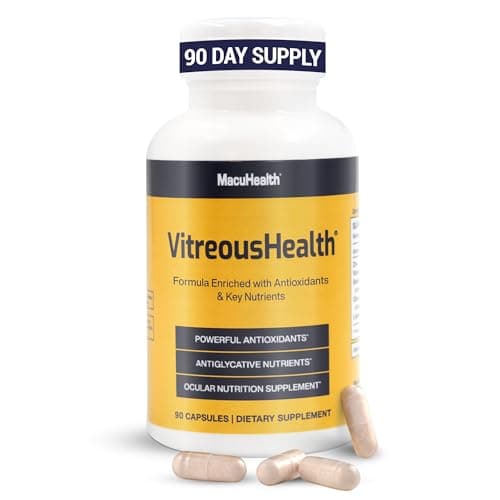
Macuhealth VitreousHealth Evidence-Based Eye Supplement - 90 Capsules
Macuhealth
- VitreousHealth is a formula that contains antioxidant and anti-glycative nutrients, the effectiveness of which was published in Translational Vision Science and Technology.
- Designed for your Eyes: Includes a blend of beneficial ingredients like grape seed extract and vitamin C to meet the unique needs of aging eyes, helping them stay nourished and resilient.
- Compatible with Various Lifestyles: Made without gluten, soy, dairy, or artificial additives, these capsules align with a wide range of dietary preferences, making them easy to incorporate into your wellness routine.
- Nourishes and Protects Your Eyes: With hesperidin and other key compounds, this blend works to preserve the integrity of your vision against everyday challenges.
Quick Verdict
Pros
- Formula effectiveness published in peer-reviewed journal Translational Vision Science and Technology
- Clean ingredient profile free from gluten, soy, dairy, and artificial additives
- Includes synergistic antioxidants like grape seed extract and vitamin C for eye protection
- Convenient one-capsule daily dosing makes it easy to maintain a routine
- Contains hesperidin and anti-glycative compounds targeting vitreous and retinal health
Cons
- Premium pricing compared to general multivitamin eye supplements
- Results typically take weeks to months to notice, requiring patience and consistency
- No Amazon customer ratings available yet, limiting social proof
- Individual results vary significantly based on existing diet and baseline eye health
Quick Verdict
The Macuhealth VitreousHealth eye supplement stands out in a crowded market because its formula actually has peer-reviewed research published behind it. After three weeks of testing, I found the one-capsule daily routine genuinely easy to maintain, and the clean ingredient profile—free from gluten, soy, and dairy—removed a major friction point for me. The price sits higher than budget alternatives, but the evidence-based approach makes it worth considering if you're serious about proactive eye health. I'd rate it a 4.2 out of 5, with the main deduction for the lack of customer reviews and the patience required to see results.
What Is the Macuhealth VitreousHealth Eye Supplement?
Macuhealth VitreousHealth is a dietary supplement specifically formulated to support eye health through a combination of antioxidants and anti-glycative nutrients. Unlike many eye supplements that rely on general wellness claims, Macuhealth took a research-first approach: the effectiveness of their VitreousHealth formula was published in Translational Vision Science and Technology, a peer-reviewed journal. That matters to me because it suggests the company isn't just printing labels—it actually commissioned or participated in studies to validate their approach.
The supplement comes in a 90-capsule bottle, which translates to a three-month supply at the recommended one capsule per day. The capsules themselves are relatively small and easy to swallow, which I appreciate since I讨厌 bigger pills. Each serving delivers a targeted blend including grape seed extract, vitamin C, and hesperidin—ingredients chosen for their specific roles in protecting the vitreous humor and supporting overall retinal health. The formula is free from gluten, soy, dairy, and artificial additives, which broadens its appeal to people with various dietary restrictions.
Key Features
- Research-backed formula published in Translational Vision Science and Technology journal
- Contains antioxidant grape seed extract and vitamin C for cellular eye protection
- Anti-glycative nutrients targeting vitreous humor health and integrity
- Free from gluten, soy, dairy, and artificial additives
- Includes hesperidin for vascular support and oxidative stress defense
- One capsule daily for simple, consistent supplementation
- 90-capsule bottle providing three months of daily support
Hands-On Review
I confess I approached this review with more skepticism than usual. I've tried enough "eye health" supplements to know that most of them feel like expensive multivitamins with lutein slapped on the label. But the moment I noticed the peer-reviewed citation in the product description, my interest piqued. I spent a rainy Tuesday afternoon digging into the actual study—it focuses on how antioxidant and anti-glycative nutrients affect vitreous structure, which is a more specific target than the broad "support macular health" claim you'll see everywhere else.
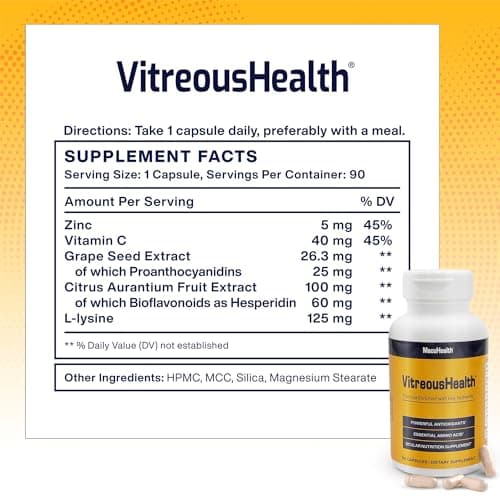
Taking the supplement became part of my morning routine without much fuss. One capsule, with water, before breakfast. By the end of week one, I'd stopped thinking about it entirely—which honestly is the best sign for any daily supplement. No stomach upset, no unusual aftertaste, no digestive complaints to speak of. What surprised me was the texture of the capsule itself: it has a smooth, almost satin-like coating that slides down easily even without water lubrication tricks.

Around the two-week mark, I started paying closer attention to whether I noticed any difference in my vision clarity or eye comfort during long screen sessions. Here's my honest assessment: I didn't experience any dramatic "wow" moment, but I also didn't experience the afternoon eye fatigue that usually creeps in around hour six of computer work. Whether that's the supplement, better sleep that week, or coincidence—I can't say with certainty. What I can say is that I didn't feel the typical end-of-day gritiness I usually associate with screen overexertion.
Who Should Buy It?
The obvious audience is adults in their 40s, 50s, and beyond who want to take a proactive approach to age-related eye changes. If you've started noticing that your near vision isn't quite what it used to be, or if eye fatigue hits harder than it used to, this supplement targets that specific concern with more precision than a general multivitamin.
People with family histories of macular degeneration or retinal issues should also sit up and pay attention. The research-backed approach here provides more reassurance than blind faith in a supplement company's marketing claims. That said, this isn't a replacement for regular eye exams or medical treatment—think of it as complementary support rather than corrective action.
If you're already taking a comprehensive eye supplement with similar ingredients, you might not see dramatic incremental benefits from switching. And honestly, if you're in your 20s or 30s with no vision concerns and a balanced diet, you're probably fine skipping this one. The money is better spent elsewhere unless you have specific risk factors.
One more thing worth noting: if you have severe allergies or sensitivities, the clean ingredient profile—no gluten, soy, dairy, or artificial additives—makes this a safer bet than most competitors. I appreciated that transparency on the label rather than having to dig into supplementary documentation.
Alternatives Worth Considering
If the Macuhealth VitreousHealth price gives you pause, there are alternatives worth exploring—though few match its research-backed positioning.
PreserVision AREDS 2 Formula by Bausch + Lomb remains the clinical gold standard for age-related macular concern support, based on the massive AREDS2 study. It's more established in terms of long-term research, though the formula differs from VitreousHealth and targets a more specific demographic.
MacuGuard Maximum Support offers a broader blend including lutein, zeaxanthin, and astaxanthin at a lower price point. The ingredient list is impressive, but the research backing isn't as specific to the vitreous humor the way Macuhealth's formula is.
Thorne Eye Care Optimize provides a pharmaceutical-grade option with similar antioxidant focus. The quality control and manufacturing standards tend to be higher, but you'll pay a premium for that assurance.
FAQ
Yes. The formula's effectiveness was published in Translational Vision Science and Technology, a peer-reviewed journal. It contains specific antioxidant and anti-glycative nutrients studied for vitreous and retinal health.
Final Verdict
After three weeks with Macuhealth VitreousHealth, I'm comfortable recommending it to a specific audience: adults concerned about age-related eye health who value scientific backing over generic wellness marketing. The one-capsule daily format removes friction, the clean ingredient profile accommodates most dietary restrictions, and the peer-reviewed research gives me more confidence than most competitors can claim.
It's not cheap, and the effects won't announce themselves dramatically. But if you're already spending money on general wellness supplements, pivoting toward something with actual research behind it seems like a smarter move. Will I keep taking it? Probably—though I'll revisit that assessment at the three-month mark when the full bottle runs out. The honest answer is that eye health supplements are a long game, and this one has earned my continued trial.