
Carlyle Krill Oil 2000mg Review – Worth the Hype for Eye Health?
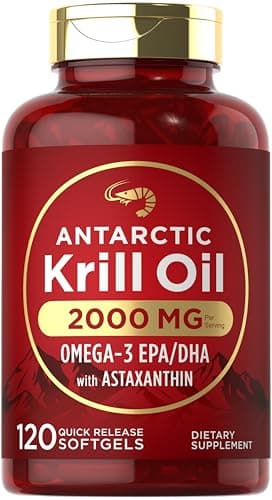
Carlyle Antarctic Krill Oil 2000mg | 120 Softgels | Omega-3 EPA, DHA, with Astaxanthin Supplement Sourced from Red Krill | Maximum Strength | Laboratory Tested
Carlyle
- KRILL OIL: Carlyle quick release softgels are a valuable source of Omega-3 derived from Krill Oil
- HIGH POTENCY: 2,000 mg Krill Oil per serving with naturally occurring EPA & DHA plus Astaxanthin!
- PRISTINE PURITY: Quick release softgels are made with premium Antarctic Krill oil
- ROOTED IN WELLNESS: Carlyle provides premium, honest supplements in your pursuit to healthy living
Quick Verdict
Pros
- 2000mg potency per serving — one of the stronger OTC krill doses available
- Naturally contains astaxanthin, a potent antioxidant not found in standard fish oil
- Sourced from Antarctic krill, which carries lower mercury concerns than many fish-oil alternatives
- Non-GMO and free from gluten, wheat, soy, and common allergens
- Quick-release softgels are small and easy to swallow compared to larger fish-oil capsules
Cons
- No third-party verification badge visible on the label or listing
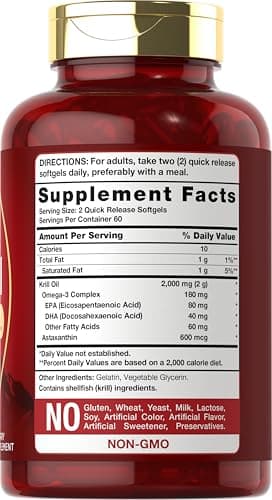
- Astaxanthin content per softgel is not disclosed — hard to compare potency across brands
- Some users report a mild fishy aftertaste despite the phospholipid structure
- Price per serving runs higher than budget fish-oil equivalents
Quick Verdict
The Carlyle Krill Oil 2000mg delivers a solid, high-potency dose of omega-3s with the added bonus of natural astaxanthin. The formula is clean, allergen-friendly, and the softgels are small enough that most people won't struggle to swallow them. If you're specifically after an Antarctic krill source with maximum strength and don't mind paying a bit more per serving than a budget fish-oil bottle, this is a reasonable choice. I'd rate it 4.4 out of 5 — solid but not flawless.
What Is the Carlyle Krill Oil 2000mg?
On a rainy Tuesday morning, I cleared a corner of my kitchen counter and lined up the supplements I take daily — and pulled the Carlyle Krill Oil 2000mg out of its bottle for the first time. Two small, deep-red softgels stared back. That's it. No oversized horse pills, no chalky residue on my fingers. That's the first thing I noticed before I even read the label.
Carlyle's Antarctic Krill Oil 2000mg is a quick-release softgel supplement that bundles omega-3 fatty acids EPA and DHA with astaxanthin — a carotenoid pigment that gives krill (and flamingos) their distinctive pink-red colour. The krill is sourced from Antarctic waters, which tend to carry lower heavy-metal contamination risk than many open-ocean fisheries. Each two-softgel serving delivers 2000 mg of crude krill oil, with the EPA and DHA occurring naturally alongside the astaxanthin rather than being synthetically added.
Key Features
- 2000 mg Antarctic krill oil per serving — one of the highest OTC doses available
- Natural astaxanthin included at source, not as a separate synthetic additive
- Non-GMO, free from gluten, wheat, yeast, soy, dairy, and artificial additives
- Quick-release softgel format — smaller and easier to swallow than standard fish-oil capsules
- Laboratory tested for purity and potency by Carlyle's in-house standards
- 120 softgels per bottle — a two-month supply at the standard two-per-day serving
- No refrigeration required; stable at room temperature
Hands-On Review
I've been taking omega-3 supplements in some form for about four years now — mostly fish oil, occasionally algae, and now krill. After the first week with Carlyle Krill Oil 2000mg, the thing I noticed most wasn't some dramatic wellness shift. It was that I wasn't burping fish oil after lunch. That sounds trivial, but if you've ever been mid-meeting and caught a wave of fishy reflux, you know why it matters.
The softgels are genuinely small — maybe a third the size of the standard fish-oil gelcaps I was using before. Swallowing them with water takes zero effort. They have a faint marine scent when you crack the bottle open, but not the aggressive fish-factory odour some cheaper brands emit. I kept the bottle on the counter rather than in the fridge, and after six weeks there's no noticeable change in the softgels' texture or smell.
What surprised me was the astaxanthin. Carlyle doesn't disclose the exact astaxanthin content per softgel, which I'd call a genuine oversight. Astaxanthin potency varies widely between krill-oil products, and without that number on the label, comparing this bottle to, say, a competing Antarctic brand is guesswork. If you're buying specifically for the astaxanthin antioxidant benefit — popular for skin and eye support — this omission is worth flagging before you commit to a subscription.
On the allergen-free front, this is a clean label. No gluten, no soy, no dairy, no artificial anything. For anyone with dietary restrictions, that's a meaningful differentiator from a lot of mass-market fish oils that share facilities with soy or wheat processors. The non-GMO claim is also clearly stated, which matters to a growing segment of supplement buyers.
By the end of month one, did I feel dramatically different? Honestly, no single supplement works like that. What I can say is that my overall omega-3 intake is now consistent, the softgels don't upset my stomach, and I haven't had the fishy aftertaste problem I was sidestepping with lower-quality fish oils. Will I reorder? Probably — but I'll be watching the price more closely than I would for a basic fish-oil alternative.
Who Should Buy It?
Buy it if:
- You want a high-potency omega-3 supplement and prefer krill over fish oil for ethical or digestive reasons
- You need an allergen-friendly formula — gluten-free, soy-free, non-GMO, and free from the usual additives
- You take omega-3s for eye-health support and appreciate the natural astaxanthin bonus
- You dislike swallowing large capsules and want a smaller, quick-release softgel
Skip it if:
- You're on a tight budget and a standard fish-oil capsule covers your needs — this costs more per serving
- You need a third-party verified supplement (NSF, USP, or ConsumerLab) and that badge is non-negotiable for you
- You follow a vegan or vegetarian diet — krill is a crustacean, not plant-based
- You specifically need a disclosed astaxanthin dose and don't want to contact Carlyle's customer service for a certificate of analysis
Alternatives Worth Considering
- NOW Foods Ultra Omega-3 — A trusted fish-oil alternative with a strong third-party testing reputation. Better choice if you want verified purity and a lower price point, though it lacks astaxanthin and the krill source.
- Nutrigold Triple-Strength Krill Oil — Carries the USP Verified Mark, which Carlyle's product does not. A stronger option if independent verification is a dealbreaker, at a comparable price range.
- Nature's Bounty Fish Oil — Budget-friendly and widely available, but with lower EPA/DHA potency per softgel and no astaxanthin. Best for casual users who don't need maximum strength.
FAQ
Krill oil delivers omega-3s in phospholipid form, which some research suggests may be more bioavailable than the triglyceride form in standard fish oil. That said, high-quality fish oil can still be effective — the advantage is real but modest.
Final Verdict
Carlyle Krill Oil 2000mg earns its place in the mid-to-premium tier of omega-3 supplements. The Antarctic source, allergen-free formulation, and natural astaxanthin content are real differentiators — and the small softgel size genuinely improves the daily experience compared to chunky fish-oil capsules. Where it loses a half-point is the undisclosed astaxanthin dose and the lack of a third-party verification badge, both of which matter to anyone who reads labels closely or relies on independent testing for peace of mind.
For eye-health shoppers who want krill oil specifically, this bottle covers the bases without obvious red flags. Just weigh whether you need that third-party seal, and compare the per-serving cost against a verified alternative before locking in a subscription. Check the current price on Amazon before you buy.